
Set up a limited company in Spain: advice in La Línea and online
Are you starting a business with partners or on your own, and want to do it through a limited company (S.L.)? We explain what has to be done and handle the paperwork, from the company name to registration. Our tax advisers and lawyers go with you until the company is incorporated, with its tax number and registered with the tax office. Our office is in La Línea de la Concepción, and we work with clients from the Campo de Gibraltar (the area around Gibraltar), Sotogrande and the Costa del Sol, in person or by video call.
Setting up a limited company without getting lost in the paperwork
We give you clear information on each stage, how long it takes and the cost of each step, from identifying the partners to opening the share capital account. The advice is designed for small businesses and entrepreneurs who want to start properly.
Setting up a limited company (sociedad limitada, S.L.) is not difficult, but the process has many steps and each one depends on the one before. This guide covers the requirements and advantages of an S.L. and what we do at each stage. If the company name is not properly reserved, the notary cannot sign. If the articles of association do not reflect the real activity, the problem appears years later, when a new partner joins or the business changes.
That is why we start with the basics: who the partners are, how much each one contributes, who will run the company and what it will do. With that we prepare the whole incorporation and all you have to do is go and sign. If you have doubts about the structure, the split between partners or the legal form, we settle them before you spend a euro at the notary.
Company name and negative name certificate. We check that the name is available and request the certificate from the Central Mercantile Registry (Registro Mercantil Central).
Articles of association written for your company. Lawyers draft them: corporate purpose, management, transfer of shares and agreements between partners.
Deed and signing before a notary. We prepare the documents and coordinate the appointment. You can also sign remotely when the case allows it.
Tax number and census registration (Form 036). We apply for the company’s tax number (NIF) and register it with the Spanish Tax Agency (Agencia Tributaria).
Incorporation tax (Form 600). We file it as registered social collaborators (colaboradores sociales) of the Andalusian regional government (Junta de Andalucía).
Following up the registration. We make sure the deed is lodged with the right Mercantile Registry and that the final tax number is requested.
Before you startSend us on WhatsApp the name you want for the company, the partners’ details and a description of the activity. We will tell you what is missing.
How to set up a limited company in Spain, step by step
This is the full process for setting up an S.L. in Spain, with the requirements of each stage. Not all steps are done in the same order, but none can be skipped.
01
Project and partners
We define who is setting up the company, what percentage each partner holds and who will be the director.
02
Negative name certificate
It is requested from the Central Mercantile Registry and proves that the name you have chosen is not already registered.
03
Articles of association and share capital
The rules for running the company are drafted, and you decide how much capital is contributed and in what form.
04
Contributions
The partners pay money into an account in the company’s name or contribute assets, which are described and valued in the deed.
05
Deed of incorporation
The public deed is signed before a notary, who applies for the company’s provisional tax number.
06
Tax and census registration
Form 600 and the census declaration (Form 036) are filed with the Tax Agency.
07
Registration in the Mercantile Registry
From that moment the company has legal personality.
08
Final tax number and first obligations
The provisional tax number is replaced and the tax calendar for the first year is set up.

Negative name certificate: choosing the company name
The name of an S.L. must end with «Sociedad Limitada», «Sociedad de Responsabilidad Limitada» or the abbreviations «S.L.» or «S.R.L.». No notary will authorise the deed of incorporation without the original negative name certificate (certificación negativa de denominación social) from the Central Mercantile Registry, issued in the name of one of the founders and still valid.
There are two time limits to keep in mind. The certificate is valid for three months from the date it is issued, and the name stays reserved for six months. If they run out before signing, you have to request it again.
You can propose several names in order of preference, but the reservation is only granted for the first name that appears as available. That is why we like to check beforehand that the name is not too similar to one already registered, and that it does not clash with a trademark you will want to use later.
Minimum share capital of an S.L.: 1 euro since the Crea y Crece Law
Since 19 October 2022, Law 18/2022 on the creation and growth of companies (Ley Crea y Crece) allows a limited company to be set up with a minimum share capital of one euro, under article 4 of the Capital Companies Act (Ley de Sociedades de Capital). Until then the minimum was three thousand euros. The old «successive formation» limited company, which allowed setting up with less capital, also disappeared.
Being allowed to does not always mean it is a good idea. While the capital is below three thousand euros, the law imposes two rules:
Reinforced legal reserve. Each year at least 20 % of the profit must go to the legal reserve, until the reserve plus the capital reaches three thousand euros.
Liability on liquidation. If the company is wound up and its assets do not cover its debts, the partners are jointly liable for the difference between three thousand euros and the subscribed capital.
Beyond the legal rules there is the practical side. A bank, a supplier or a landlord looks at the share capital as a sign of solidity, and a company with real activity usually needs more than one euro to get started. We help you decide on a figure that makes sense for the business, not for the minimum.
Capital and liabilityAn S.L. limits the partners’ liability to what they contribute, except in this specific case. With low capital, liability for debts can reach the difference up to three thousand euros.
Capital contributions: money or assets
The partners subscribe shares (participaciones), which represent their part of the company and give them rights: a vote at the general meeting, a share of profits and pre-emption if shares are transferred. They pay for them with a contribution. The usual one is a cash contribution: the money is paid into a bank account in the name of the company being formed, and the bank issues a certificate that the notary attaches to the deed.
You can also contribute an asset, such as a vehicle, equipment or premises. In that case the deed must describe it and give it a value in euros. If the contribution is a property, the tax treatment of the transaction also has to be reviewed before signing. Incorporation costs depend on the capital and the contributions, and you will know them before you sign.
When setting up an S.L. there is an alternative to the bank certificate. The founders can state in the deed that they are jointly liable, towards the company and its creditors, for the money having really been contributed. We explain what each option involves so that you can choose with full information.
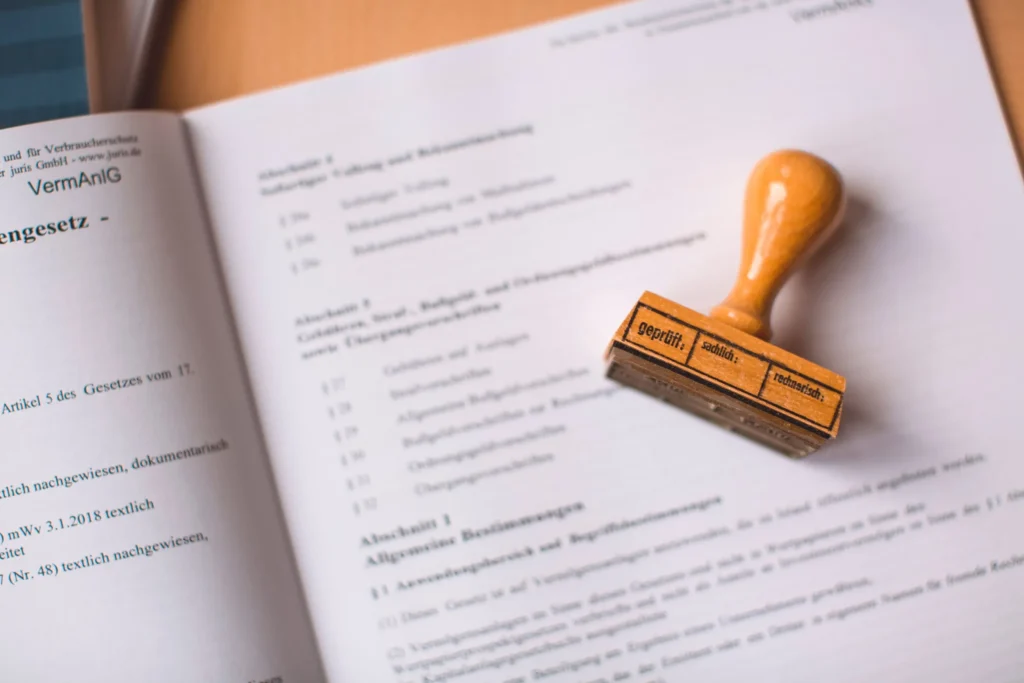
Articles of association, corporate purpose and directors
The articles of association are the company’s internal rulebook. The law requires them to include, at a minimum, the company name, the corporate purpose with the activities it covers, the registered address, the capital, the number and value of the shares, and how the management is organised.
The difference lies in what is added to that minimum:
- How shares are transferred if a partner wants to leave, and whether the others have a right of first refusal.
- What majorities are needed to take decisions.
- Whether management is in the hands of a sole director, two joint directors, two several directors or a board.
- When the financial year ends. If nothing is said, it is understood to end on 31 December.
The company’s bodies are the general meeting of partners, which decides the main matters, and the management body, which runs and represents the company. As for directors, you should know that their duties of diligence and loyalty are personal and that they are liable for their conduct. Depending on your case, partners who are also directors will have to consider registering with Social Security. A good split of roles from day one avoids conflicts between partners.
If it is going to be a single-member company, with only one partner, we set that up too. The deed is similar and the articles are adapted to that case.
Notary and Mercantile Registry in Cádiz or Málaga
The incorporation of a capital company requires a public deed, signed before a notary, and its registration in the Mercantile Registry (Registro Mercantil). Until it is registered, the company does not acquire its own legal personality, and its shares cannot be transferred.
The founding partners and the directors have two months from the signing of the deed to submit it for registration. After that period, they are liable for any damage caused by the delay.
Mercantile Registries are provincial, and the right one is that of the province of the registered address. A company with its address in La Línea, San Roque, Algeciras or any other municipality in Cádiz is registered in the Cádiz Mercantile Registry. If the address is in Marbella, Estepona or any other municipality in Málaga, it is registered in the Málaga one. Choosing the registered address well, and making it a real and usable address, is part of the incorporation.
Incorporation through CIRCE or through a notary: two routes
There are two ways to set up an S.L., and the professionals involved change with each. The first is the traditional one: the documents are prepared and signed at the notary of your choice. The second is electronic, through the CIRCE system. An Entrepreneur Service Point (Punto de Atención al Emprendedor, which notaries are) completes the Single Electronic Document (Documento Único Electrónico) with you, which gathers the data needed to set up the company and start the activity, and sends it electronically.
The CIRCE route allows the model articles approved by Royal Decree 421/2015, which have fixed content and cannot be changed. It is a quick option for simple companies, and the registrar has a maximum of six working hours to register once the electronic copy is received.
If your case needs agreements between partners, contributions of assets or specific management rules, the usual choice is the traditional route with articles written for your company. We tell you which suits you before you decide, and in both cases the signing is before a notary.
Company tax number and census registration (Form 036)
The company needs its tax number before it can sell goods, provide services or make purchases. It is requested in the census declaration, Form 036, within the month following incorporation. The notary can obtain the provisional tax number when the deed is signed.
The tax number is provisional until a copy of the registered deed is submitted to the Tax Agency. Once it is registered in the Mercantile Registry, an amending Form 036 is filed and the final tax number is assigned. If this is not done on time, the Tax Agency can send you a notice and may even revoke the provisional tax number.
Form 036 is also used for the census registration of the activity: it states the business activity, the VAT regime, withholdings and the obligation to file each tax. A mistake on this form causes problems with Hacienda for years, so we go through it with you item by item. Every company needs it: without census registration you cannot issue invoices.
Incorporation tax: exempt, but Form 600 is still filed
The incorporation of companies is exempt from Transfer Tax and Stamp Duty (Impuesto sobre Transmisiones Patrimoniales y Actos Jurídicos Documentados) in its corporate operations category. Even so, in Andalusia Form 600 has to be filed marked as exempt, within two months of the date of the deed. We do it as registered social collaborators of the Andalusian regional government.
Without that filing, the Mercantile Registry will not register the deed. It is best not to leave it to the last day.
First tax obligations of the new company
Once the company is incorporated, the company calendar begins. These are the first tax and corporate obligations you should know about:
We explain from the start what you have to file and when, so that you can arrange the ongoing management of the company with whoever you prefer.
VAT and withholdings
Depending on the activity and what is stated on Form 036, you will have to file periodic VAT returns and, if you pay salaries or rent, withholding returns.
Corporation tax
It is declared every year. The deadline is 25 calendar days starting from six months after the end of the financial year, that is, in July if the financial year matches the calendar year.
Reduced rate for new companies
Newly created companies carrying out business activities pay 15 % in the first period in which the taxable base is positive and in the next one, with the exceptions set by law.
Business activities tax (IAE)
It is notified in the census registration. Companies with a turnover below one million euros are exempt, as are all companies in their first two years of activity.
Annual accounts
The directors must draw them up within three months of the year end and, once approved by the general meeting, file them with the Mercantile Registry within the following month.
S.L. or self-employed? When it makes sense to set up as a limited company
There is no single answer, and this guide does not replace an analysis of your case. Among the advantages of a limited company are that it separates the company’s assets from your personal ones and makes it easier to bring in partners, but it requires keeping commercial accounts, filing annual accounts and meeting more formal obligations than a self-employed person (autónomo).
It usually pays off when there are several partners, when significant financial risks are taken on, when the business invoices steadily or when you want to keep family assets out of the activity. If your case is unclear, before setting up the company we go over the legal form and its tax treatment with you.
Startups: setting up an emerging company and its tax advantages
If your project is a technology-based or innovative startup, Law 28/2022 on promoting the ecosystem of emerging companies (known as the Startups Law, Ley de startups) gives it its own tax regime. To qualify, the company must meet these requirements:
- Be newly created, or have been registered in the Mercantile Registry for less than five years (seven in biotechnology, energy, industry and other strategic sectors).
- Not be the result of a merger, demerger or conversion of companies that are not emerging companies.
- Have its registered office or a permanent establishment in Spain, with at least 60 % of its staff on employment contracts in Spain.
- Not be listed on a stock exchange, not distribute dividends and not exceed €10 million in annual turnover.
- Run an innovative business project with a scalable business model, which must be accredited by ENISA, the Spanish public agency for innovative companies.
ENISA grants the certification after assessing the project, and the emerging company status is then entered in the Mercantile Registry. We set up the company with that stage in mind, help you prepare the application and, once it is certified, apply the advantages in your taxes:
Corporation tax at 15 %
In the first period with a positive taxable base and in the following three, as long as the company keeps its emerging company status. The general rate is 25 %.
Deferral with no security or interest
The corporation tax due for the first two periods with a positive taxable base can be deferred for 12 and 6 months, without providing security and without late-payment interest.
No instalment payments
The company does not have to make corporation tax instalment payments (pagos fraccionados) in the two periods following the first one with a positive taxable base.
Investors and employees
Investors in the startup can deduct 50 % of their investment in their personal income tax (IRPF), up to a maximum base of €100,000 a year. Shares given to employees are exempt up to €50,000 a year. In both cases, subject to the requirements set by law.
Also online: set up your company from anywhere
If you live outside La Línea, in another city in Spain or abroad, you do not need to travel. We hold the meeting by video call, you send us the documents on WhatsApp, and we work with digital signature and electronic filing whenever the rules allow. The deed is signed before a notary.
If a partner or director is a foreign national or lives in Gibraltar, they will need a foreigner’s identity number (NIE) before signing. We take this into account from day one so that it does not delay the incorporation.
Frequently asked questions about setting up a limited company
What is the minimum capital to set up an S.L.?
One euro, since Law 18/2022 (Crea y Crece). While the capital is below three thousand euros, 20 % of the profit goes to the legal reserve, and on liquidation the partners are liable for the difference up to that figure. We recommend choosing the capital according to the activity and not according to the minimum.
Which documents do I need to set up a limited company?
Identity documents of the partners and directors (NIE if they are foreign nationals), the name or names you prefer for the company, the registered address, a description of the activity, each partner’s share and the capital they contribute. We start with that.
How long does it take for the company to be incorporated?
It depends on when you have the information ready, and on the diary of the notary and the Mercantile Registry. The law sets maximum periods: the negative name certificate is valid for three months, the deed must be submitted for registration within two months and the tax number is requested in the month following incorporation. Through CIRCE with model articles, the registrar has six working hours to register.
Can an S.L. be set up with a single partner?
Yes. It is called a single-member company (sociedad unipersonal) and it is still a limited company, with its own legal personality. It is set up with the same deed and the same steps, and the company name can indicate it.
Can you help set up a startup or emerging company?
Yes, with the incorporation and tax side: the limited company, the articles of association and the shareholders’ agreement between the founders, the application to ENISA for emerging company certification, and applying the Startups Law advantages in your taxes. We do not handle investment rounds, contracts with investors or intellectual property; if you need them, we will point you to the right professional.
What is the difference between the provisional and the final tax number?
The provisional number is obtained when the deed is signed and lets the company operate until it is registered. The final number is assigned when the deed registered in the Mercantile Registry is submitted to the Tax Agency.
What do you do and not do after incorporation?
Our service is to leave the company properly set up: name, articles of association, deed, tax number, census registration, Form 600 and registration, and to explain which tax obligations it will have. After incorporation we do not keep monthly accounts or payroll, and we do not handle company secretarial work (minute books and meetings), capital increases, holding companies or complex operations between companies. We focus on incorporation and, for the rest, we point you to the right professional.
Do you work with partners who do not live in La Línea?
Yes. Our office is in La Línea de la Concepción, and many clients come from the Campo de Gibraltar, Sotogrande or the Costa del Sol. Those in other cities or abroad send us their details and we hold the meetings by video call.
Other services
Tell us about your project and we will tell you which steps are missing
The aim is that getting the tax number, applying at the Registry and using the electronic platform do not cost you time. For the detail of the rules that apply to you, and to avoid travelling, a first conversation and the documents of the partners taking part are enough. Message us on WhatsApp or fill in the form with the company name, the partners and the activity. We will review the case and tell you which documents we need to set up your limited company.
Our office is in La Línea de la Concepción. We see you online or in person.
C/ Cervantes 2, entreplanta, despacho 4 · 11300 La Línea de la Concepción
WhatsApp 652 948 572 · 956 174 981 · pablo@asesoriaserra.es